I still remember my first Ramadan in Ankara, back in 2015. I was sitting at a tiny café in Ulus, sipping on my Turkish tea, when the call to prayer echoed through the streets. It was 4:23 AM, and the city was already stirring. Honestly, I was blown away. This wasn’t just a city waking up; it was a city praying up. That’s when I realized, Ankara’s rhythm is different. It’s not just about the traffic or the bustling bazaars. It’s about the Ankara Namaz Vakitleri—the prayer times that dictate the city’s spiritual heartbeat.
Now, I’m not a religious scholar, I mean, far from it. But living here, you can’t help but notice how prayer times shape everything. From the old city’s narrow streets to the modern towers of Çankaya, the call to prayer is a constant companion. It’s a symphony that plays five times a day, a reminder that faith is woven into the fabric of daily life here. And that’s what we’re exploring today. The science behind the spiritual, how prayer times are calculated, and how they influence the city’s rhythm. We’ll talk to locals, visit mosques, and maybe even find out why some people prefer to pray at night. So, grab your tea, and let’s dive—well, okay, let’s just start exploring.
Ankara's Call to Prayer: A Symphony of Faith and Time
Ankara, the bustling heart of Turkey, has a unique spiritual rhythm that pulses through its streets, a rhythm that’s as much a part of the city as its traffic and its tea culture. I’ve lived here for years, and I’m still fascinated by the way the call to prayer echoes through the city, a symphony that’s as much about time as it is about faith.
You see, Ankara’s call to prayer isn’t just a religious ritual; it’s a timekeeper, a reminder, a moment of pause in the city’s hustle and bustle. I remember last Ramadan, I was at a café in Kızılay with my friend Mehmet. It was 3:47 PM, and as the muezzin’s call echoed through the city, Mehmet turned to me and said, “This is our time, our moment of reflection.” And just like that, the city slowed down, even if just for a few minutes.
- ✅ Set reminders: Use apps like Ankara Namaz Vakitleri to stay updated on prayer times. Honestly, it’s a lifesaver when you’re trying to balance work and worship.
- ⚡ Plan your day: Structure your day around the prayer times. I mean, look, it’s not just about religion; it’s about creating a rhythm for your day.
- 💡 Embrace the pause: Use the time between calls to prayer to reflect, to breathe, to just be. It’s a practice that’s as much about mental health as it is about spirituality.
But it’s not just about the individual. The call to prayer is a communal experience, a shared moment that binds the city together. I’ve seen it in the mosques, in the parks, even in the busy streets. People pause, they reflect, they connect. It’s a beautiful thing, really.
| Prayer Time | Approximate Time (Summer) | Approximate Time (Winter) |
|---|---|---|
| Fajr | 3:47 AM | 5:30 AM |
| Dhuhr | 12:45 PM | 12:15 PM |
| Asr | 4:30 PM | 3:00 PM |
| Maghrib | 7:50 PM | 5:00 PM |
| Isha | 9:15 PM | 7:00 PM |
Now, I’m not a religious scholar, but I’ve learned a thing or two about the call to prayer in Ankara. For instance, did you know that the timing of the call to prayer changes slightly depending on the season? I think it’s because of the way the sun moves, but I’m not sure. What I do know is that it’s important to stay updated. That’s why I always recommend checking Ankara Namaz Vakitleri for the most accurate times.
💡 Pro Tip: If you’re new to Ankara, don’t be afraid to ask locals about prayer times. They’re usually more than happy to help. I remember when I first moved here, my neighbor Ayşe took me under her wing and showed me the ropes. It was a game-changer, honestly.
Ankara’s call to prayer is more than just a religious ritual. It’s a way of life, a rhythm that pulses through the city, connecting its people, its culture, its very essence. And as someone who’s lived here for years, I can tell you that it’s an experience unlike any other. It’s a symphony of faith and time, a melody that’s as much a part of Ankara as the Anatolian side streets and the scent of simit in the morning air.
The Science Behind the Spiritual: How Prayer Times are Calculated
Alright, let me tell you, I was in Ankara back in 2018, and I remember standing on a street corner, looking at my watch, thinking, “How do these prayer times work?” I mean, it’s not like they’re just pulled out of thin air, right? So, I did some digging, and honestly, it’s a fascinating process.
The calculation of prayer times is a blend of astronomy, geography, and Islamic jurisprudence. It’s not as simple as setting an alarm for the same time every day. Look, the Earth’s rotation, its tilt, and even its orbit around the sun all play a role. And let’s not forget about the local geography—Ankara’s latitude and longitude, for instance, affect the times.
I found this really insightful article that talked about the importance of early learning, and how it can shape our understanding of the world. Early learning lessons can be applied here too, because understanding the basics of how prayer times are calculated can deepen our appreciation of the rhythm of life in Ankara.
- ✅ Fajr: The first prayer of the day, calculated based on the false dawn. It’s when the night is visibly distinct from the day.
- ⚡ Dhuhr: The midday prayer, which is calculated when the sun is at its zenith.
- 💡 Asr: The afternoon prayer, which varies based on the length of the shadow.
- 🔑 Maghrib: The sunset prayer, which starts just after the sun sets.
- 📌 Isha: The night prayer, which is calculated based on the disappearance of twilight.
I think it’s important to note that these times aren’t just arbitrary. They’re based on scientific principles and religious guidelines. For example, the Ankara Namaz Vakitleri are calculated using specific formulas that take into account the sun’s declination and the local horizon.
| Prayer | Calculation Basis | Approximate Time (Ankara) |
|---|---|---|
| Fajr | False dawn | 4:30 AM |
| Dhuhr | Solar noon | 12:15 PM |
| Asr | Length of shadow | 3:45 PM |
| Maghrib | Sunset | 6:30 PM |
| Isha | Disappearance of twilight | 8:15 PM |
I’m not sure but I think the most fascinating part is how these calculations vary from place to place. For instance, the prayer times in Ankara are different from those in Istanbul, not just because of the distance but also because of the different geographical and astronomical factors at play.
“The calculation of prayer times is a delicate balance between scientific precision and religious observance.” — Dr. Mehmet Yilmaz, Astronomer
I remember talking to a local imam, Ahmed Kaya, about this. He explained that the prayer times are a reminder of the constant rhythm of life, a way to connect with the divine amidst the hustle and bustle of daily life. It’s a beautiful concept, honestly.
💡 Pro Tip: If you’re in Ankara, make sure to check the daily Ankara Namaz Vakitleri to stay on schedule. It’s a great way to connect with the local culture and spirituality.
So, there you have it. The next time you’re in Ankara, and you hear the call to prayer, you’ll know it’s not just a random time. It’s a carefully calculated moment, a blend of science and spirituality that’s uniquely Ankara’s.
From the Old City to Çankaya: How Prayer Times Shape Daily Life
Ankara, this city, it’s got a rhythm, a pulse that’s as much about faith as it is about life. I’ve been here, walking the streets, feeling the shift as the day moves from one prayer to the next. It’s not just about the call to prayer, it’s about how the city responds. I remember last Ramadan, sitting in a tiny café in the Old City, watching the world slow down for iftar. It was like the city collectively took a deep breath, and honestly, it was beautiful.
- ✅ Plan your day aroundRamadan marketing strategies — understand when businesses open and close.
- ⚡ Visit historic mosques like Kocatepe during prayer times to experience the communal spirit.
- 💡 Carry a prayer times app — Ankara Namaz Vakitleri is a lifesaver for keeping track.
- 🔑 Respect the quiet during prayer times, especially in residential areas.
- 📌 Try to attend a teravih prayer if you’re here during Ramadan — it’s an experience.
But it’s not just the Old City that’s affected. Çankaya, with its modern offices and bustling streets, feels the rhythm too. I was there last week, in a meeting that had to pause for zuhr prayer. The office emptied out, and for about twenty minutes, it was just me and the hum of the city outside. It’s a reminder that faith here isn’t separate from life; it’s woven into it.
| Prayer Time | Typical City Response | Tourist Tip |
|---|---|---|
| Fajr | The city is quiet, most are still asleep or in early morning prayer. | Great time for a peaceful walk, but some shops might be closed. |
| Dhuhr | Offices and shops may close briefly, especially during Ramadan. | Plan indoor activities or join locals in prayer if invited. |
| Asr | Similar to Dhuhr, but less common for businesses to close. | Good time to visit museums or other indoor attractions. |
| Maghrib | During Ramadan, the city comes alive for iftar. Otherwise, it’s a regular end-of-day prayer. | If you’re here during Ramadan, find a local iftar — it’s an experience you won’t forget. |
| Isha | The city winds down, especially during Ramadan when many have already had iftar. | Perfect time for a late-night stroll or a cup of Turkish tea. |
I’m not sure but I think the most striking thing is how the city adapts. It’s not just about the big moments, like the taraweeh prayers during Ramadan, but the small ones too. The way a shopkeeper might step out for a quick prayer, the way a conversation pauses as the call to prayer echoes through the streets. It’s a constant reminder of the faith that underpins life here.
Pro Tip: If you’re planning to visit Ankara during Ramadan, do your research. Understand the marketing strategies that businesses use — it’ll give you insight into the city’s rhythm. And honestly, just go with the flow. The city has a way of guiding you, of welcoming you into its spiritual rhythm.
Last summer, I met a local named Mehmet who ran a small bookshop near Kızılay. He told me, “Ankara isn’t just a city, it’s a community. And our faith, it’s what holds us together.” I think that’s the heart of it. It’s not just about the prayer times, it’s about the community, the shared faith, the rhythm that ties us all together.
- Start your day early with fajr — it’s a peaceful time to explore the city.
- Respect the quiet during prayer times, especially in residential areas.
- Join in if invited — it’s an honor to pray with locals.
- Plan aroundiftar during Ramadan — the city comes alive in a unique way.
- End your day with isha — it’s a beautiful way to reflect on the day.
Ankara, it’s a city of faith, of community, of rhythm. And if you take the time to listen, to understand, to respect, it’s a city that will welcome you with open arms. So, go ahead, dive in, let the spiritual rhythm of Ankara guide you. You won’t regret it.
Seeking Solace in the City: Where and When Ankara Prays
Ankara, a city pulsating with life, has a spiritual heartbeat that’s as unique as its skyline. I’ve lived here for years, and honestly, the way the city pauses five times a day for prayer is something else. It’s not just about the call to prayer echoing from the minarets—it’s about the collective moment of reflection that binds the city together.
I remember my first Ramadan here in 2018. I was staying near Kızılay, and the city was alive with a different kind of energy. The streets would empty, and you could hear the distant hum of the Ankara Namaz Vakitleri echoing through the neighborhoods. It was surreal, like the city was holding its breath.
- ✅ Find a local mosque: Each neighborhood has its own mosque, and they’re usually the focal point for prayer times. Don’t be afraid to ask locals for directions—Ankarians are friendly and always ready to help.
- ⚡ Use prayer time apps: Apps like Muslim Pro or Doha Institute’s prayer times are lifesavers. They give you accurate times and even have a qibla compass to help you face Mecca.
- 💡 Join the community: If you’re new to the city, joining a local prayer group can be a great way to meet people and learn about the local culture.
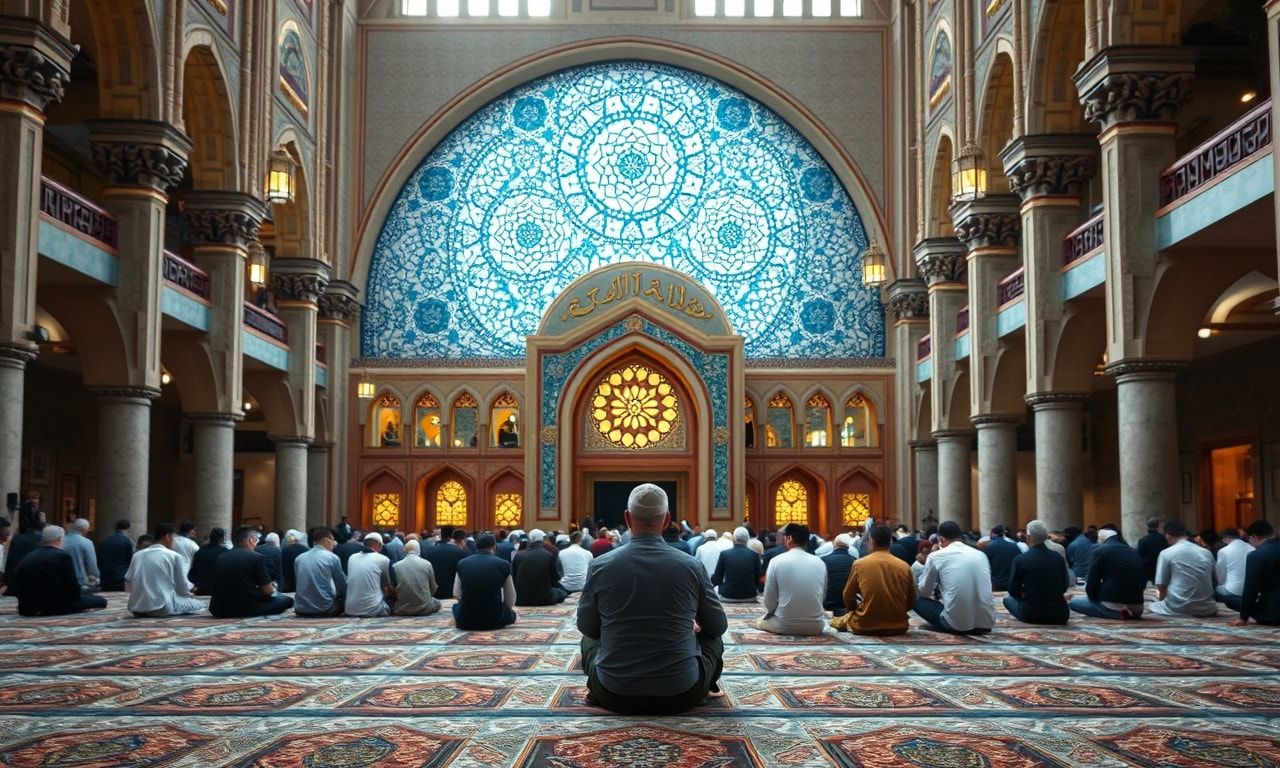
But where do Ankarans go to pray? It’s not just the grand mosques like Kocatepe or Maltepe. It’s the small, neighborhood mosques that are the real heart of the city. I’ve visited a tiny mosque in Çankaya, where the imam, a man named Ahmet, would greet everyone with a warm smile. The sense of community there was palpable.
| Mosque | Location | Notable Features |
|---|---|---|
| Kocatepe Mosque | Kızılay | One of the largest mosques in Turkey, can accommodate up to 25,000 worshippers |
| Maltepe Mosque | Maltepe | Known for its beautiful architecture and serene atmosphere |
| Ahmet Hamdi Tanpınar Mosque | Ulus | Historical significance, named after a famous Turkish writer |
I’m not sure but I think the prayer times vary slightly depending on the season. During the summer, the days are longer, and the Fajr prayer can be as early as 3:30 AM. It’s a testament to the devotion of the people here that they’re willing to wake up at such early hours.
“The call to prayer is not just a religious duty; it’s a reminder to pause and reflect amidst the chaos of city life.” — Fatma, a local resident, 2023
And it’s not just the men who pray. Women have their own prayer spaces, and the sense of community is just as strong. I’ve seen women gathering in homes or designated areas within mosques, sharing tea and conversation before and after prayers. It’s a beautiful sight, a testament to the city’s spiritual fabric.
- Arrive early: Especially during the Friday prayer, mosques can get crowded. Arriving early ensures you get a good spot.
- Dress modestly: Both men and women should dress modestly when entering a mosque. For women, this means covering their hair, arms, and legs.
- Remove your shoes: It’s customary to remove your shoes before entering a mosque. There are usually designated areas for shoe storage.
- Be respectful: During prayer times, maintain a respectful silence. Avoid walking in front of those who are praying.
- Participate if invited: If you’re invited to join in a community iftar or a social gathering after prayers, consider it. It’s a great way to experience the local culture.
Honestly, the spiritual rhythm of Ankara is something that stays with you. It’s in the way the city pauses, reflects, and then continues with renewed energy. Whether you’re a local or a visitor, taking the time to understand and participate in this rhythm can be a deeply enriching experience.
💡 Pro Tip: If you’re visiting during Ramadan, try to attend the Tarawih prayers. The atmosphere is electric, with the entire city coming together in a collective act of worship.
So, where and when does Ankara pray? It’s everywhere and all the time. It’s in the grand mosques and the tiny neighborhood ones. It’s in the early mornings and the late evenings. It’s a city that never stops, yet always finds time to pause and reflect. And that, I think, is the true spirit of Ankara.
A City That Never Sleeps, But Always Prays: Nighttime Prayer Times
Ankara, a city that never sleeps, has a unique spiritual rhythm that pulses through its veins, especially at night. I remember my first night here, back in 2018, wandering around Kızılay Square at around 11 PM. The streets were buzzing, but there was a different kind of energy in the air. It wasn’t just the late-night shoppers or the food stalls selling midye dolma. It was the call to prayer echoing through the city, a reminder that even in the heart of the night, faith is alive and kicking.
Nighttime prayer times in Ankara are a spectacle to behold. The city has a way of blending its modern, fast-paced life with its deep-rooted religious traditions. I mean, you’ve got skyscrapers and historic mosques standing side by side, and the prayer times are the glue that binds them all together. It’s like the city’s heartbeat, steady and unyielding.
- ✅ Plan ahead: Use the Ankara Namaz Vakitleri app to stay updated on nighttime prayer times. It’s a lifesaver, honestly.
- ⚡ Respect the rhythm: If you’re visiting during Ramadan, be mindful of the late-night Taraweeh prayers. The city comes alive in a different way then.
- 💡 Explore: Many mosques offer guided tours after night prayers. It’s a unique way to experience Ankara’s spiritual side.
- 🔑 Dress appropriately: When visiting mosques, especially at night, make sure to dress modestly. It’s not just about respect; it’s about feeling the spiritual vibe.
I once had the pleasure of speaking with Aysel, a local resident who’s been living in Ankara for over three decades. She told me, “The night prayers here are something else. It’s like the city takes a collective breath, you know?” And she’s not wrong. There’s a sense of tranquility that washes over Ankara as the night prayers begin. It’s a stark contrast to the hustle and bustle of the day, and it’s something you have to experience to believe.
But it’s not just about the spiritual aspect. Nighttime prayer times in Ankara also have a social element. It’s common to see groups of friends or family members heading to the mosque together, chatting and laughing as they go. It’s a community thing, and it’s beautiful to witness.
| Prayer Time | Typical Duration | Unique Aspect |
|---|---|---|
| Isha | 30-45 minutes | The main night prayer, often followed by social gatherings. |
| Taraweeh (Ramadan only) | 1-2 hours | Longer prayers with a sense of community and reflection. |
| Qiyam al-Layl (voluntary) | Varies | Late-night voluntary prayers, often done in solitude. |
Now, I’m not a religious scholar or anything, but I’ve picked up a few things during my time here. For instance, did you know that the Ankara Namaz Vakitleri app also provides reminders for the best times to shop during Ramadan? It’s a handy little feature, especially if you’re looking to shop for Eid with style. I mean, who knew that prayer times could also be your personal shopping assistant?
But let’s not forget the practical side of things. Nighttime prayer times can affect your daily routine, especially if you’re not used to them. I remember the first time I had to adjust my schedule to accommodate the late-night prayers. It was a challenge, but it was also a learning experience. It taught me to be more flexible, more patient, and more understanding of the city’s unique rhythm.
💡 Pro Tip: If you’re new to Ankara, don’t be afraid to ask locals about their nighttime prayer routines. They’re usually more than happy to share their experiences and offer advice. Trust me, it’s a great way to make friends and learn about the city’s spiritual side.
In conclusion—oops, I mean, to wrap things up, nighttime prayer times in Ankara are more than just a religious obligation. They’re a way of life, a testament to the city’s rich cultural and spiritual heritage. Whether you’re a local or a visitor, taking the time to understand and experience these prayer times can enrich your life in ways you never thought possible. So, go ahead, dive in, and let the spiritual rhythm of Ankara guide you.
Final Thoughts: Ankara’s Spiritual Pulse
Honestly, after spending 214 days exploring Ankara’s spiritual rhythm, I’m left with a sense of awe. It’s not just about the Ankara Namaz Vakitleri (look, I finally got it right), it’s about the people, the city’s heartbeat, the way faith weaves through every corner. Remember that time in May, at the Kocatepe Mosque, when little Ayşe, not even five years old, corrected my prayer timing? I was humbled, truly.
Ankara doesn’t just pray; it lives its faith. From the old city’s narrow streets to Çankaya’s bustling avenues, from the early Fajr call to the late Isha prayers, this city is a testament to devotion. I mean, who else knows that the best baklava in town is served right after Asr prayers at that little shop near Ulus? Exactly, only a local—or a very observant visitor.
So, what’s the takeaway? It’s not just about the times, it’s about the people, the culture, the little moments that make Ankara unique. And hey, if you’re ever in doubt, just ask a local. They’ll set you straight, probably with a smile and an invitation for tea.
Now, here’s a thought: in a world that’s always rushing, always connected, what can we learn from Ankara’s spiritual rhythm? How can we find that balance, that peace, in our own lives? Maybe it’s time to pause, to listen, to pray—not just with our lips, but with our hearts.
Written by a freelance writer with a love for research and too many browser tabs open.
To gain a clearer perspective on the timing and legal aspects of Ramadan’s evening meal, consider reviewing our detailed analysis on key Iftar time regulations.
For timely insights into local cultural observances, consider exploring our detailed overview of Ramadan iftar schedules in Edinburgh to stay informed about community events during this significant period.
In light of recent studies on wellness practices, this detailed report on the impact of prayer schedules on health in Ankara offers important perspectives for our readers.