
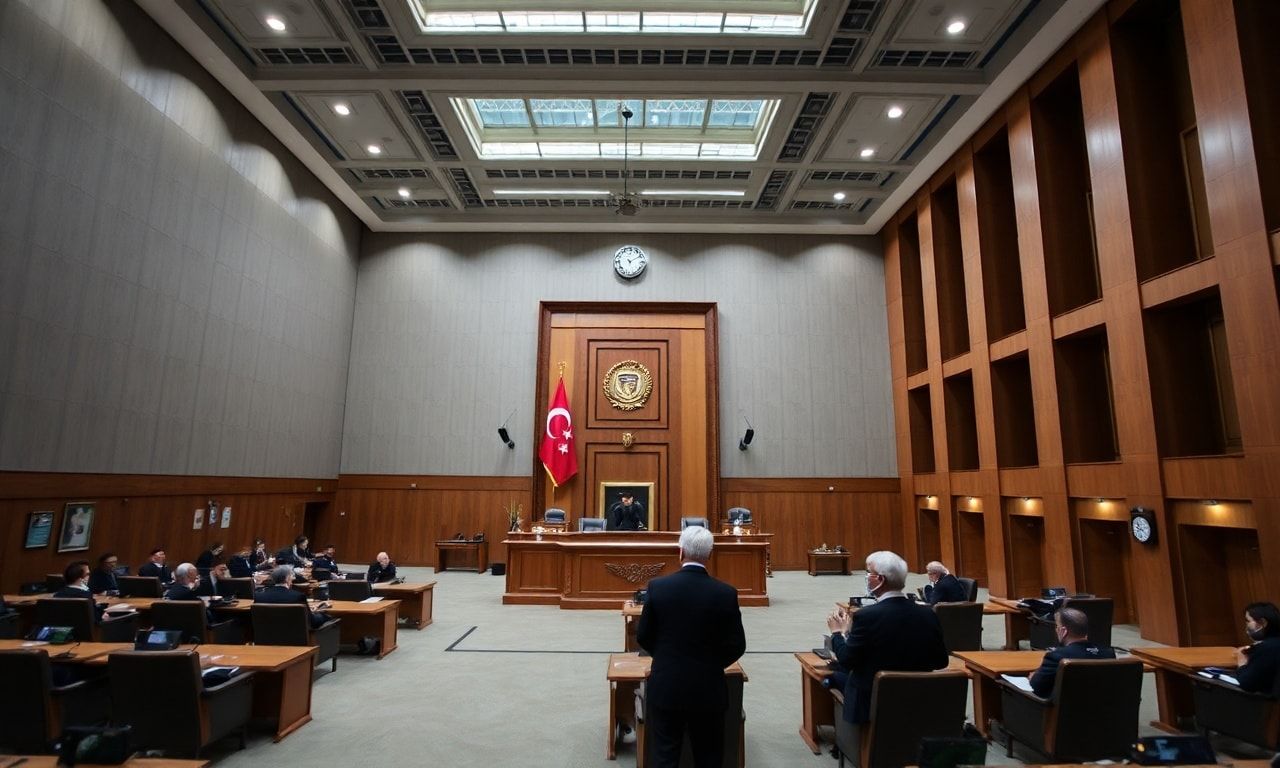
What shapes the course of justice in one of the world’s most geopolitically significant nations? Turkey’s Supreme Court stands at the crossroads where legal interpretation meets societal change, wielding influence far beyond its courtroom walls. For anyone interested in the inner workings of Turkish law and its ripple effects, understanding the decisions made within this highest judicial body is indispensable. This isn’t just about rules or precedents; it’s about how those rulings echo through daily life, politics, and culture.
Every day, the court handles cases that challenge the boundaries of tradition, democracy, and modern governance. From constitutional questions to civil disputes, its judgments carry weighty consequences, often captured and analyzed through resources like the yargıtay karar veri tabanı, which offers crucial access to these legal decisions for professionals and the public alike. As political dynamics shift and societal expectations evolve, the court’s role becomes even more critical — balancing legal consistency with pressing contemporary issues.
This article takes readers behind the scenes to explore the court’s daily operations, meet the judges who interpret the law, and examine how their rulings influence Turkish society and governance. It will also consider the tension between maintaining legal tradition and adapting to new challenges, looking ahead to what the future may hold for Turkey’s judicial authority.
The Heart of Justice: A Day Inside Turkey’s Supreme Court
Turkey’s Supreme Court, known as Yargıtay, stands as the ultimate arbiter in the nation’s judiciary system. Located in Ankara, it handles a high volume of cases annually, ranging from civil disputes to criminal appeals. On any given day, justices gather to review complex legal arguments that can reshape interpretations of Turkish law. The atmosphere is one of intense scrutiny and balance, where every decision carries substantial weight for society at large.
- ✅ Understanding how Yargıtay processes cases offers insight into Turkish legal culture
- ⚡ Familiarity with the en iyi karar arama platformu can greatly aid in researching precedent decisions
- 💡 Public access to court rulings promotes transparency and accountability
Justices begin their day by reviewing files and previous rulings. The court employs divisions specialized in different branches of law to expedite deliberations. Each case is scrutinized through multiple lenses, with judges debating the merits and legal interpretations before reaching a verdict. This rigorous process ensures that rulings are consistent with the constitution and established legal principles.
| Aspect | Role in Yargıtay Operations |
|---|---|
| Case Assignment | Cases sorted by legal category to respective chambers |
| Deliberation | Panel discussion to analyze facts and law |
| Decision Publication | Final rulings documented in official records and databases |
For legal professionals and scholars, the ability to access the yargıtay karar veri tabanı—the extensive database of Supreme Court decisions—is invaluable. It not only serves as a legal reference but also reflects the evolving jurisprudence of Turkey. The court’s work echoes beyond the courtroom, influencing legislation and everyday legal practices.
💡 Pro Tip: Leveraging platforms like the en iyi karar arama platformu enables more efficient case law research, critical for attorneys seeking precedents or understanding judicial trends.
Behind the Bench: Meet the Judges Shaping Legal Precedents
The judges of Turkey’s Supreme Court, or Yargıtay, are pivotal in interpreting laws that resonate throughout the nation. These jurists come from diverse legal backgrounds, with many having served in lower courts or amassed experience in academia, bringing a rich blend of perspectives to the bench. Their decisions don’t just resolve individual cases—they lay down legal precedents that influence the entire judicial system. Often, their rulings act as guiding principles for lower courts, shaping Turkey’s evolving legal landscape.
- ✅ Cultivate a deep understanding of Turkish civil and criminal law to appreciate judges’ decisions.
- ⚡ Monitor updates on judicial appointments to anticipate shifts in legal interpretations.
- 💡 Utilize resources like the udf dosyasını arşivlik pdf yapma tool for archiving important legal documents efficiently.
Judges at the Supreme Court regularly consult the yargıtay karar veri tabanı, a vast and accessible database of precedent-setting rulings. This system allows them to cross-reference past judgments and maintain consistency in their decisions. Furthermore, each judge specializes in specific chambers that focus on different areas such as criminal, civil, or administrative law, ensuring that cases benefit from experts with a deep understanding of the relevant legal nuances.
| Judge Role | Primary Focus | Experience Required |
|---|---|---|
| Chamber Judge | Specialized Legal Area | 15+ Years in Relevant Courts |
| Supreme Panel Judge | Review of Chamber Decisions | 20+ Years with High Legal Expertise |
| Presiding Judge | Overall Court Administration | 25+ Years, Leadership Skills |
Understanding who these judges are and their roles helps demystify how legal precedents are shaped. Their responsibilities extend beyond ruling on cases; they must also uphold judicial integrity and transparency in a highly scrutinized environment. The procedural rigor and wealth of experience they bring ensure that Turkey’s legal decisions are grounded in thorough legal doctrine and consistent interpretation.
💡 Pro Tip: For legal professionals and scholars, regularly accessing the yargıtay karar veri tabanı can provide invaluable insights into emerging legal trends and judicial reasoning employed by Supreme Court judges.
How Landmark Rulings Ripple Through Turkish Society and Politics
Landmark rulings from Turkey’s Supreme Court often transcend courtroom walls, influencing both societal norms and political trajectories. These decisions can recalibrate public policies and shift political debates, reflecting the judiciary’s capacity to act as a powerful agent of change in a dynamic democratic environment. As such, these rulings are closely monitored by policymakers, media, and the public alike.
- 📌 Court decisions shape social attitudes by interpreting fundamental rights and freedoms.
- 🎯 Judicial rulings impact legislative agendas, prompting reforms or adjustments in law.
- ⚡ High-profile judgments contribute to political discourse, sometimes sparking controversy.
One notable aspect is how these rulings affect economic regulations, especially in fast-evolving sectors. For example, recent decisions have had a marked effect on e-commerce strategies across Turkey—a sector growing at a rapid pace in the digital age. Businesses and legal experts increasingly refer to resources like the analysis on new rulings’ impact on commerce to adapt and ensure compliance.
| Impact Area | Effect of Supreme Court Rulings | Examples |
|---|---|---|
| Social Policy | Reinterpretation of rights, influencing public norms | Gender equality, freedom of expression cases |
| Political Environment | Shifts in power dynamics, legislative changes | Electoral law, administrative decisions |
| Economic Regulation | Legal clarity and compliance demands | E-commerce regulations, trade law |
Moreover, the Supreme Court’s rulings are systematically cataloged in the yargıtay karar veri tabanı, a critical resource providing transparency and promoting legal consistency across institutions. This database supports lawyers, researchers, and the public in tracking precedents and understanding judicial trends. It stands as a testament to increased access to legal information in Turkey.
💡 Pro Tip: For those analyzing Turkey’s legal environment, regularly reviewing the yargıtay karar veri tabanı offers insights into shifting legal interpretations and helps anticipate future societal and political impacts.
The Tug of War: Balancing Tradition, Law, and Modern Pressures
The Supreme Court of Turkey operates at a crossroads where deep-rooted traditions meet an evolving legal landscape shaped by internal and external pressures. This tug of war challenges the court’s ability to maintain judicial independence while responding to political dynamics and societal expectations. The legacy of Ottoman legal principles and republican reforms still influences its philosophy, but today’s justices must also consider international law and Turkey’s commitments on the global stage.
- 🎯 Stay informed about political changes that could impact judicial appointments and decisions
- 💡 Understand how modernization efforts influence court procedures and transparency
- ⚡ Follow technological advancements like the modern legal research tools that affect case review and rulings
Balancing these forces isn’t simple. Justices rely on the yargıtay karar veri tabanı (Supreme Court decision database) to ensure consistency and to align older rulings with emerging legal interpretations. Meanwhile, public scrutiny and media attention amplify the stakes, placing the court under a microscope. The tension between preserving legal continuity and adapting to contemporary needs often surfaces in high-profile cases dealing with human rights, constitutional questions, or economic regulations.
| Aspect | Traditional Influence | Modern Pressures |
|---|---|---|
| Legal Framework | Rooted in Ottoman and early Turkish Republic laws | Incorporation of international treaties and EU standards |
| Judicial Independence | Strong heritage of legal autonomy | Political appointments and public opinion impact |
| Information Technology | Manual archival and physical case books | Digital databases and AI-assisted case research |
💡 Pro Tip: To fully grasp Turkey’s Supreme Court decisions, one should explore the yargıtay karar veri tabanı alongside cutting-edge legal analytics tools, bridging tradition with innovation.
Ultimately, the Supreme Court’s decisions not only reflect a legal balancing act but also mirror the broader societal transformation Turkey is undergoing. Navigating this delicate intersection requires both reverence for the past and open-mindedness toward future challenges, ensuring that justice prevails in a complex and ever-changing environment.
What Lies Ahead: The Future Challenges Facing Turkey’s Judicial Power
Turkey’s judicial system stands at a crossroads, facing numerous challenges that will shape its future role and influence. As the Supreme Court continues to exert significant authority, questions about judicial independence and political pressure remain central. Maintaining a balance in the face of evolving political dynamics is no small feat. Moreover, the integration of technology into court processes presents both opportunities and hurdles, as judicial bodies strive to improve transparency and efficiency.
- ⚡ Embrace digitalization to streamline case management and reduce backlog
- ✅ Strengthen measures ensuring impartiality across all levels of the judiciary
- 💡 Promote accessibility to legal decisions through public databases like the yargıtay karar veri tabanı
- 🔑 Foster ongoing training for judges to keep up-to-date with legal reforms and international standards
The Supreme Court’s future will likely revolve around how it adapts to modern demands, including facilitating better access to rulings and legal documents. Tools that aid in document management and editing are becoming essential. For example, Unlocking seamless document editing offers a glimpse into how complex legal files can be handled more effectively, making judicial decisions easier to disseminate and analyze.
| Challenge | Potential Solution | Impact on Judiciary |
|---|---|---|
| Political Influence | Stricter safeguards for judicial independence | Increased public trust |
| Case Backlog | Digital case management systems | Faster verdicts and reduced delays |
| Transparency | Publicly accessible decision databases | Improved accountability |
💡 Pro Tip: Utilizing comprehensive and user-friendly platforms such as the yargıtay karar veri tabanı ensures that legal professionals and the public stay informed and engaged with the court’s rulings.
Ultimately, the Supreme Court’s ability to confront these challenges head-on will play a decisive role in shaping Turkey’s legal landscape for years to come. The path forward demands a commitment to justice that honors the rule of law while embracing necessary reforms to meet 21st-century expectations.
The Last Word on Turkey’s Judicial Crossroads
Turkey’s Supreme Court stands at a pivotal intersection, where centuries-old legal traditions meet the pressures of a rapidly evolving society. Behind its imposing chambers, judges wield influence that reaches far beyond courtroom walls—shaping policy, reflecting societal values, and sometimes igniting spirited debate. Their decisions, archived meticulously in the yargıtay karar veri tabanı, offer a glimpse into a justice system striving for balance amid competing forces.
Yet, the court’s challenges are unmistakable. How can it uphold impartiality while facing political currents? Can it preserve legal integrity while adapting to new realities? These questions are far from academic—they touch on the very heart of democratic governance and the rule of law in Turkey. The Supreme Court’s evolving role will continue to reveal much about the nation’s future trajectory.
As observers and citizens alike follow the unfolding story of Turkey’s highest court, a broader reflection emerges: What does justice truly mean in times of change? The answers will shape not only legal precedents but the social fabric itself.
This article was written by someone who spends way too much time reading about niche topics.
To stay informed on the evolving landscape of the legal system, consider exploring our detailed coverage on changes shaping today’s courts.
For an in-depth look at how technology is reshaping the legal field, consider exploring this article on innovative tools supporting today’s lawyers.
To gain a deeper understanding of how grassroots movements influence justice systems, consider the detailed analysis in citizens shaping legal outcomes in Pakistan.