
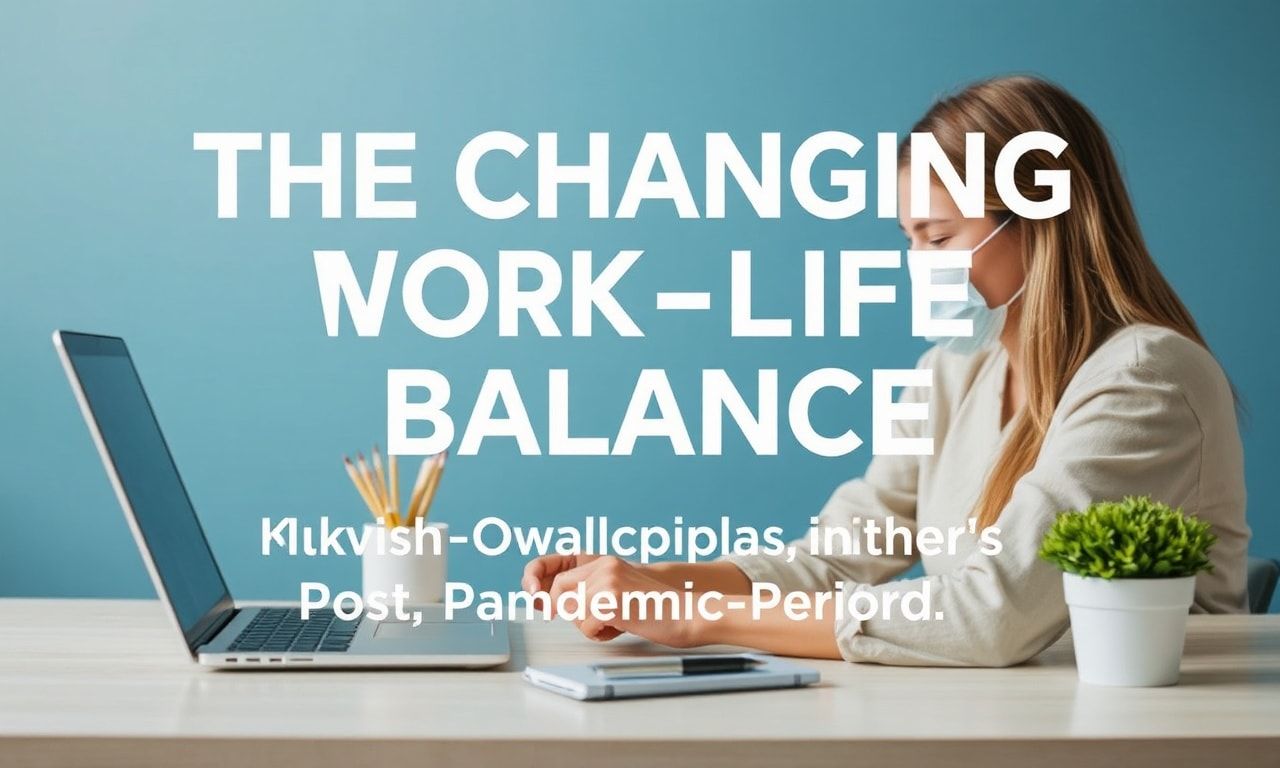
The Shift in Work Dynamics
The global pandemic has brought about a significant shift in the way we perceive work and life balance. With remote work becoming the norm, the boundaries between professional and personal life have blurred, leading to a new conversation about work-life balance. This article explores the evolving dynamics of work-life balance in the post-pandemic era, offering insights and strategies to navigate this new normal.
The Impact of Remote Work
Remote work has been both a blessing and a curse. On one hand, it has provided flexibility and saved commuting time. On the other hand, it has led to longer working hours and the inability to disconnect from work. According to a study by the University of Perth, employees are now working an average of three hours more per day. This has raised concerns about burnout and mental health.
To mitigate these issues, experts suggest implementing work life balance strategies tips that promote a healthy work environment. This includes setting clear boundaries, taking regular breaks, and creating a dedicated workspace at home.
The Role of Employers
Employers play a crucial role in promoting work-life balance. They can do this by offering flexible working hours, providing mental health resources, and encouraging employees to take time off. Companies that prioritize employee well-being are likely to see increased productivity and job satisfaction.
Moreover, employers should lead by example. If managers are seen working late and responding to emails outside of work hours, employees may feel pressured to do the same. Therefore, it’s essential for leaders to model healthy work habits.
The Importance of Self-Care
Self-care is not a luxury but a necessity, especially in the current work environment. It involves taking care of one’s physical, mental, and emotional health. This can include activities like exercise, meditation, and spending time with loved ones.
Self-care also involves setting boundaries. It’s important to communicate these boundaries to colleagues and managers. For instance, if an employee prefers not to work late, they should make this clear. Similarly, if an employee needs to take a break during the day to recharge, they should feel comfortable doing so.
Looking Ahead
The future of work-life balance is likely to be shaped by technology. With the rise of artificial intelligence and automation, there’s a possibility that routine tasks will be taken over by machines, freeing up time for employees to focus on more meaningful work.
However, it’s important to remember that technology is a tool, not a solution. It should be used to enhance work-life balance, not replace it. Therefore, it’s crucial to strike a balance between leveraging technology and maintaining human connection.
In conclusion, the post-pandemic era has brought about a new perspective on work-life balance. It’s a complex issue that requires a multi-faceted approach. By implementing effective strategies, promoting a healthy work environment, and prioritizing self-care, we can navigate this new normal and achieve a better work-life balance.