
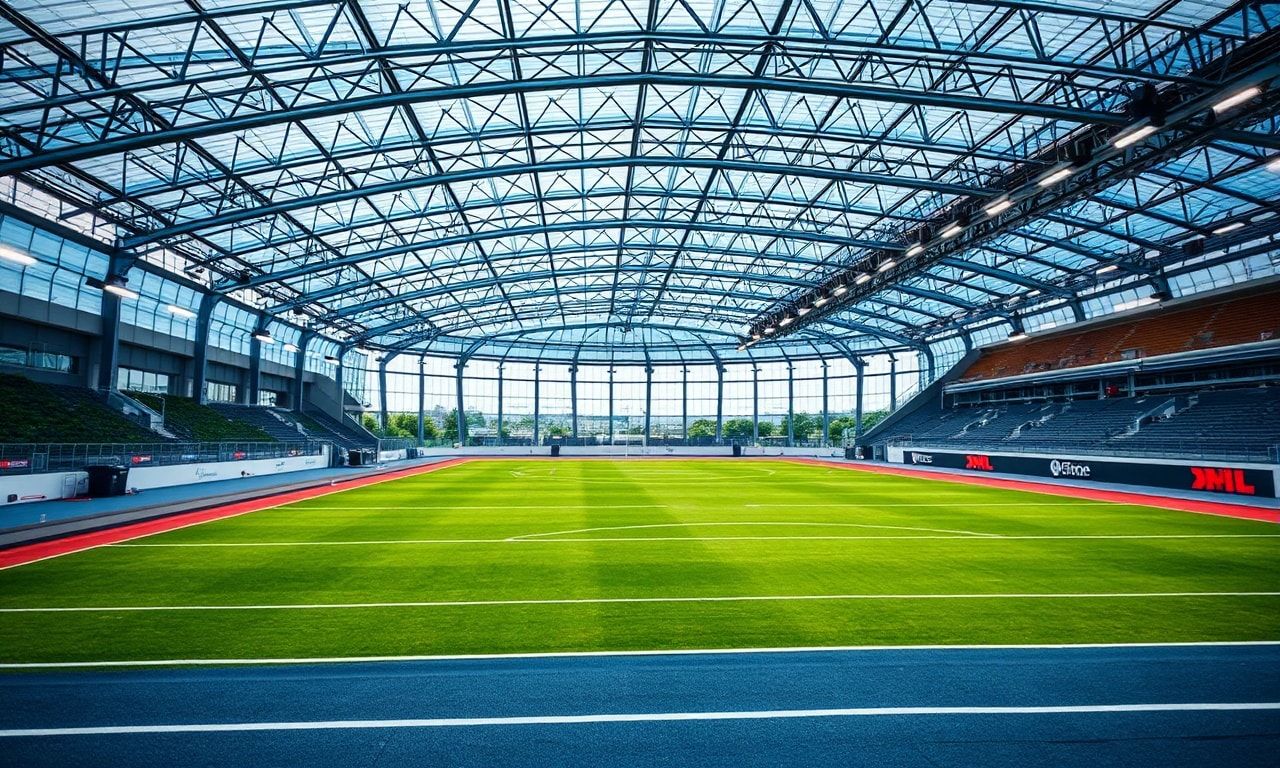
The Evolution of Sports Infrastructure Worldwide
The world of sports is not just about the games and the athletes; it’s also about the stadiums, the facilities, and the infrastructure that support these events. Recent years have seen significant developments in sports infrastructure across the globe, driven by a combination of technological advancements, increased investment, and a growing recognition of the economic and social benefits of sports.
From the United States to Ethiopia, countries are investing heavily in upgrading and building new sports facilities. These developments are not only aimed at enhancing the spectator experience but also at fostering local talent, attracting international events, and boosting tourism. This article explores some of the most notable recent developments in sports infrastructure and their potential impact on the global sports landscape.
The Rise of Technological Integration in Stadiums
One of the most significant trends in sports infrastructure development is the integration of advanced technology. Modern stadiums are increasingly equipped with state-of-the-art features such as high-definition screens, augmented reality experiences, and mobile apps that enhance the fan experience. For instance, the Mercedes-Benz Stadium in Atlanta, USA, is renowned for its retractable roof and 360-degree halo video board, which provides an immersive viewing experience for spectators.
Similarly, the Ethiopian football league stadium development and news has highlighted the country’s efforts to modernize its sports facilities. The integration of technology in these stadiums is not only improving the fan experience but also helping to attract international tournaments and investments. The use of digital ticketing, mobile apps, and advanced security systems are just a few examples of how technology is transforming the sports infrastructure landscape in Ethiopia and beyond.
The Economic Impact of Sports Infrastructure
The economic benefits of investing in sports infrastructure are well-documented. New and upgraded stadiums can create jobs, stimulate local economies, and attract tourists. For example, the construction of the SoFi Stadium in Los Angeles is expected to generate billions of dollars in economic activity and create thousands of jobs. Similarly, the development of sports facilities in emerging markets like Ethiopia can have a profound impact on local economies by creating employment opportunities and attracting foreign investment.
Moreover, sports events hosted in these facilities can bring in significant revenue through ticket sales, merchandise, and tourism. The hosting of major international events like the FIFA World Cup or the Olympics can put a country on the global map, attracting visitors and investors. The Ethiopian football league stadium development and news has shown that even smaller-scale events can have a substantial economic impact, particularly in regions where tourism is a key driver of economic growth.
The Social and Cultural Benefits
Beyond the economic advantages, sports infrastructure development also has significant social and cultural benefits. Sports facilities serve as community hubs, bringing people together and fostering a sense of community. They provide a space for local sports teams to train and compete, and they offer recreational opportunities for people of all ages and backgrounds.
In Ethiopia, the development of sports infrastructure is seen as a way to promote national unity and pride. The construction of new stadiums and the upgrading of existing facilities are part of a broader effort to enhance the country’s sports culture and provide opportunities for young athletes. The Ethiopian football league stadium development and news has highlighted the government’s commitment to investing in sports as a means of social development and national cohesion.
The Challenges and Considerations
While the benefits of sports infrastructure development are numerous, there are also challenges and considerations to keep in mind. One of the primary challenges is the high cost of construction and maintenance. Building and maintaining state-of-the-art sports facilities require significant financial resources, and there is always a risk that the investment may not yield the expected returns.
Another challenge is ensuring that the facilities are accessible to all members of the community. There is a risk that high-profile sports events and facilities may cater primarily to wealthy elites, leaving out marginalized groups. It is crucial for developers and policymakers to consider the social equity implications of sports infrastructure projects and ensure that they are inclusive and accessible to all.
Additionally, environmental sustainability is an increasingly important consideration in sports infrastructure development. The construction and operation of sports facilities can have a significant environmental impact, from energy consumption to waste generation. Developers are increasingly looking for ways to minimize this impact through the use of sustainable materials, renewable energy sources, and green building practices.
The Future of Sports Infrastructure
The future of sports infrastructure is likely to be shaped by a combination of technological advancements, economic factors, and social considerations. As technology continues to evolve, we can expect to see even more innovative features in sports facilities, from virtual reality experiences to smart stadiums that use data analytics to enhance the fan experience.
Economically, the trend towards public-private partnerships is likely to continue, as governments and private investors seek to share the risks and benefits of sports infrastructure development. This approach can help to ensure that projects are financially sustainable and that the benefits are shared equitably among stakeholders.
Socially, there will be an increasing emphasis on inclusivity and accessibility, as developers and policymakers recognize the importance of ensuring that sports facilities serve the needs of all members of the community. Environmental sustainability will also be a key consideration, as the sports industry seeks to reduce its environmental footprint and contribute to global efforts to combat climate change.
In conclusion, the development of sports infrastructure is a complex and multifaceted issue that involves a wide range of stakeholders and considerations. From the integration of advanced technology to the economic and social benefits, the impact of sports infrastructure development is far-reaching and profound. As the global sports landscape continues to evolve, it will be crucial for developers, policymakers, and communities to work together to ensure that sports facilities are sustainable, inclusive, and beneficial for all.
To gain a deeper understanding of recent advancements in healthcare, consider exploring global health initiatives progress and their impact on worldwide health policies.
As global audiences continue to engage with major sporting events, our latest feature, world’s top sports events, offers an in-depth look at the competitions capturing international attention.
As the football season progresses, discover who’s making waves in 2024 with the world’s top players dominating the field.
In the realm of current events and sports journalism, Ethiopia’s football scene offers global lessons in the impact of local leagues on a broader scale.