
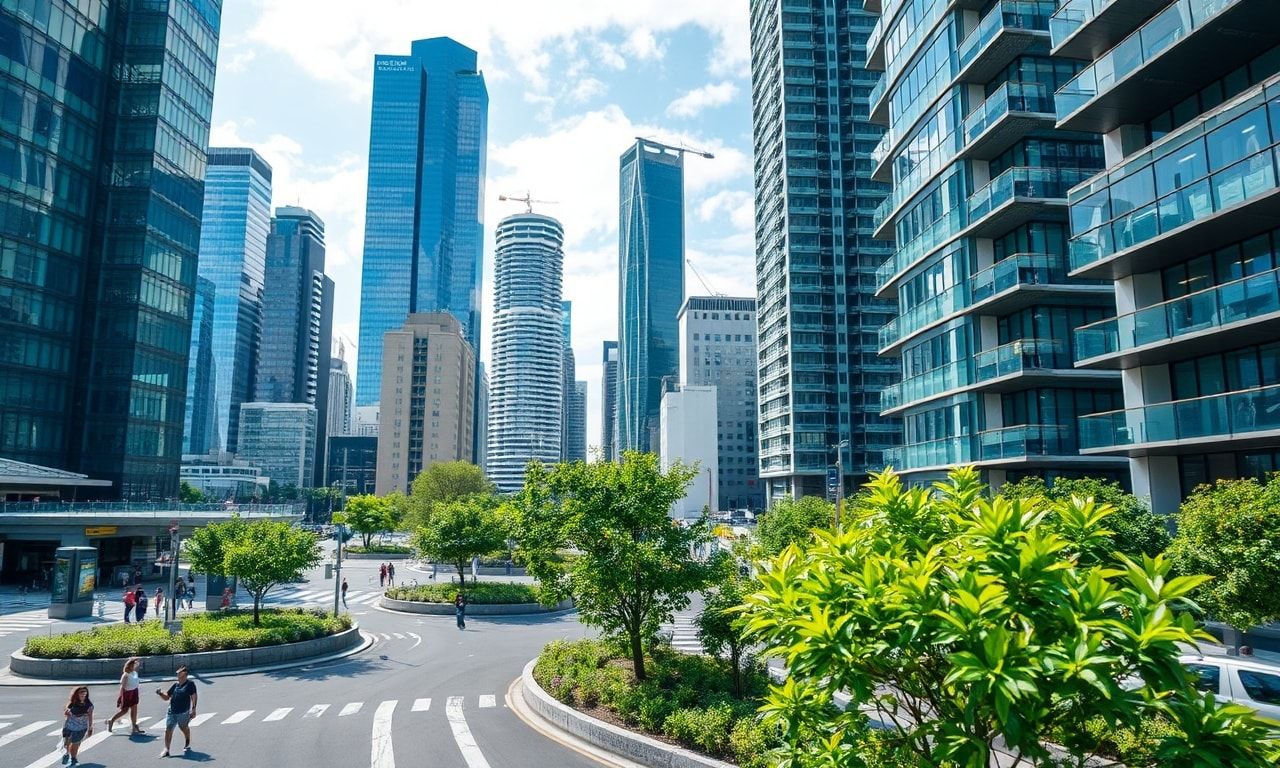
The Rise of Sustainable Urban Development
The world is witnessing a significant shift towards sustainable urban development as cities strive to reduce their environmental impact and improve the quality of life for residents. This movement is driven by the need to address climate change, resource depletion, and the increasing urban population. Cities around the globe are implementing innovative projects that focus on sustainability, resilience, and inclusivity. In this article, we explore some of the most notable initiatives and their impact on urban landscapes.
Green Infrastructure and Urban Planning
One of the key aspects of sustainable urban development is the integration of green infrastructure into city planning. Green roofs, urban forests, and permeable pavements are just a few examples of how cities are incorporating nature into their design. These elements not only enhance the aesthetic appeal of urban areas but also provide numerous environmental benefits, such as reducing air pollution, mitigating the urban heat island effect, and improving water management.
For instance, Copenhagen, Denmark, has set an ambitious goal to become the first carbon-neutral capital by 2025. The city has invested heavily in green infrastructure, including extensive bike lanes, green roofs, and urban parks. These initiatives have not only reduced the city’s carbon footprint but also enhanced the well-being of its residents. Similarly, Singapore has embraced the concept of the ‘City in a Garden,’ integrating greenery into its urban fabric through initiatives like the Green Mark certification for buildings and the creation of the Gardens by the Bay.
Innovative Transportation Solutions
Transportation is a significant contributor to urban pollution and congestion. To address this, cities are adopting innovative transportation solutions that prioritize sustainability and efficiency. Electric vehicles, public transportation, and bike-sharing programs are becoming increasingly popular. Additionally, smart traffic management systems and the development of pedestrian-friendly zones are helping to reduce traffic congestion and improve air quality.
Amsterdam, known for its cycling culture, has further enhanced its sustainability efforts by expanding its network of bike lanes and promoting the use of electric vehicles. The city aims to ban all petrol and diesel vehicles by 2030, a bold step towards reducing emissions. Meanwhile, in Kyiv, Ukraine, efforts are being made to improve urban living conditions, including the organization of bathroom renovations to enhance residential spaces. For those looking to як організувати ремонт ванної кімнати в києві, there are numerous resources and services available to assist in creating more sustainable and efficient living environments.
Renewable Energy and Energy Efficiency
The transition to renewable energy is a critical component of sustainable urban development. Cities are increasingly investing in solar, wind, and other renewable energy sources to power their infrastructure. Energy-efficient buildings, smart grids, and district heating systems are also being implemented to reduce energy consumption and lower greenhouse gas emissions.
Stockholm, Sweden, is a leader in sustainable energy initiatives. The city has implemented a district heating system that utilizes waste heat from various sources, including data centers and industrial processes. This system has significantly reduced the city’s reliance on fossil fuels and lowered its carbon emissions. Similarly, Barcelona has embraced the concept of ‘superblocks,’ where groups of city blocks are transformed into pedestrian-friendly zones with reduced traffic and increased green spaces. These superblocks are not only more pleasant for residents but also contribute to the city’s sustainability goals.
Community Engagement and Inclusivity
Sustainable urban development is not just about infrastructure and technology; it also involves engaging communities and ensuring that development is inclusive and equitable. Cities are increasingly involving residents in the planning process, promoting community-led initiatives, and addressing social and economic disparities.
Melbourne, Australia, has been recognized for its inclusive and participatory approach to urban planning. The city has implemented various programs to engage residents in decision-making processes, ensuring that development projects meet the needs and aspirations of the community. Similarly, Medellín, Colombia, has transformed its urban landscape through innovative social urbanism projects that prioritize accessibility, public spaces, and community engagement. These initiatives have not only improved the quality of life for residents but also fostered a sense of belonging and social cohesion.
The Future of Sustainable Urban Development
The future of sustainable urban development lies in the continued innovation and collaboration between cities, governments, and communities. As urban populations grow and climate change becomes an increasingly pressing issue, the need for sustainable and resilient cities will only increase. By embracing green infrastructure, innovative transportation solutions, renewable energy, and community engagement, cities can create a more sustainable and equitable future for all residents.
In conclusion, the global shift towards sustainable urban development is not only essential for addressing environmental challenges but also for creating vibrant, inclusive, and resilient cities. As more cities adopt innovative projects and initiatives, the collective impact on the environment and quality of life will be significant. The examples highlighted in this article demonstrate that sustainable urban development is not only achievable but also beneficial for both people and the planet.