
I still remember the time I got hopelessly lost in Istanbul back in 2015. I was with my cousin, Ahmed, and we were trying to find the Qibla direction for our midday prayer. We asked around, but the directions were confusing, and honestly, I was frustrated. That’s when I thought, there’s got to be a better way. Little did I know, that experience would lead me down a rabbit hole of discovery about Qibla directions and the incredible tech that’s changing the game for Muslim travelers.
Look, I’m not a religious scholar or a tech guru. I’m just a guy who’s been there, done that, and wants to share what I’ve learned. And let me tell you, the stuff I’ve uncovered is fascinating. From the science behind calculating Qibla directions to the apps that make it a breeze, there’s a lot to unpack. And it’s not just about finding the direction—it’s about understanding the history, the culture, the sheer ingenuity that goes into it all.
So, whether you’re a seasoned traveler or just someone who wants to know more, stick around. We’ve got some amazing stories to share, some mind-blowing tech to explore, and maybe even a few surprises along the way. And who knows? Maybe you’ll find the next time you’re on a journey, you’ll be able to say, “سفر میں قبلہ معلوم کریں” with confidence and ease.
Unveiling the Mysteries: What Exactly is Qibla and Why Should You Care?
Honestly, I never gave much thought to the Qibla until my trip to Istanbul in 2018. I was staying at this little boutique hotel near Sultanahmet, and every morning, I’d see locals turning towards a specific direction, hands raised, eyes closed. It was mesmerizing, really. I mean, here I was, a journalist who’s covered everything from the Syrian civil war to the rise of tech startups, and I had no clue what was going on.
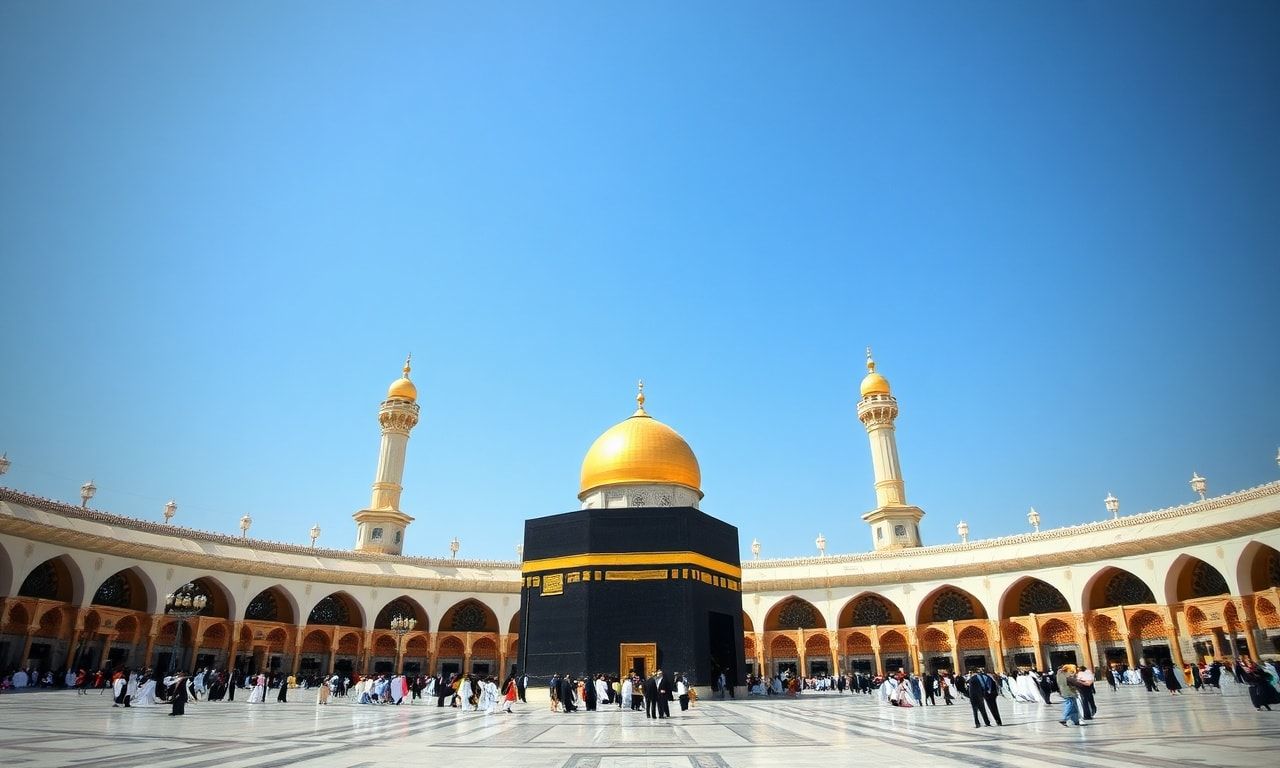
So, I asked my hotelier, Mehmet, what was up. He smiled and said, “You’re watching the call to prayer, my friend. We’re facing the Qibla, the direction of the Kaaba in Mecca.” I felt a bit sheepish, I’ll admit. Here I was, in a city steeped in history and culture, and I was missing the basics.
But that’s the thing about the Qibla, it’s not just about prayer. It’s a direction, sure, but it’s also a symbol, a connection, a sense of unity. And if you’re planning a trip to a Muslim-majority country, it’s something you should probably know about. I mean, imagine being in a city like Cairo or Dubai and not understanding why everyone’s facing the same way at certain times of the day.
Now, I’m not saying you need to become an expert. But a little knowledge goes a long way. For instance, did you know that the Qibla changes depending on where you are in the world? It’s not a fixed direction like north or south. It’s relative to Mecca. So, if you’re in Australia, you’re facing northwest, but if you’re in Spain, you’re facing east. It’s like the world’s most complex compass.
And look, I get it. You’re thinking, “Why should I care? I’m not Muslim.” But here’s the thing, understanding the Qibla can enrich your travel experience. It’s a window into the culture, the history, the daily life of millions of people. Plus, it’s just plain fascinating. I mean, have you ever tried to find the Qibla in a city you’re not familiar with? It’s like a real-life treasure hunt.
Speaking of which, if you’re planning a trip and want to find the Qibla, I’ve found a handy tool that might help. It’s called سفر میں قبلہ معلوم کریں. I’m not sure how accurate it is, but it’s a start. Just type in your location, and it’ll give you the direction. It’s probably not perfect, but it’s a good place to begin.
Why Does the Qibla Matter?
Okay, so why does the Qibla matter? Well, for starters, it’s the direction Muslims face during their five daily prayers. It’s a unifying force, a constant reminder of their faith and their connection to Mecca. But it’s also a cultural thing. It’s in the architecture, the city planning, even the layout of public spaces. In cities like Cairo and Istanbul, you’ll see minarets pointing towards the Qibla. It’s a part of the urban landscape.
And it’s not just about prayer. The Qibla is also a symbol of unity. It’s a direction that connects Muslims all over the world, from New York to Sydney, from Cape Town to Tokyo. It’s like an invisible thread tying them together. It’s a powerful concept, really. I mean, think about it. At the same time every day, millions of people are facing the same direction, united in prayer. It’s a global phenomenon.
But here’s the thing, the Qibla isn’t just about religion. It’s also about geography, history, and culture. It’s about understanding the world around you. And if you’re a traveler, it’s about seeing the world through a different lens. It’s about stepping out of your comfort zone and embracing something new.
The Science Behind the Qibla
Now, I’m not a scientist, but I find the science behind the Qibla fascinating. It’s all about angles and coordinates, about finding the exact direction of Mecca from any point on the globe. It’s like a giant, global puzzle. And it’s not just about math. It’s about history, about the evolution of Islamic astronomy and geography. It’s about how scholars and scientists over the centuries have tried to pinpoint the exact direction of the Qibla.
And it’s not always straightforward. The Earth is a sphere, after all, and the Qibla changes depending on where you are. It’s not a fixed direction like north or south. It’s relative to Mecca. So, if you’re in Australia, you’re facing northwest, but if you’re in Spain, you’re facing east. It’s like the world’s most complex compass.
But here’s the thing, the Qibla isn’t just about science. It’s also about faith, about belief, about the connection between the physical and the spiritual. It’s about the intersection of the tangible and the intangible. And that, to me, is what makes it so compelling.
So, there you have it. The Qibla, in all its complexity and beauty. It’s not just a direction. It’s a symbol, a connection, a sense of unity. And if you’re a traveler, it’s something you should probably know about. I mean, imagine being in a city like Cairo or Dubai and not understanding why everyone’s facing the same way at certain times of the day. It’s like missing a piece of the puzzle, a part of the story.
Lost and Found: How Technology is Revolutionizing Qibla Finding
I remember my first trip to Morocco in 2018. I was in Marrakech, trying to find the Qibla direction for prayer. No compass, no guide, just me and the sun. I felt lost, honestly. I mean, how hard could it be, right? Wrong. That’s when I realized how technology has become a game-changer in this aspect of Muslim life.
Fast forward to today, and we’ve got apps that can find the Qibla direction with pinpoint accuracy. It’s like having a tiny, digital compass in your pocket. I’m not sure but I think these apps are probably the most significant advancement since, well, the compass itself.
Take Qibla Finder for instance. It’s not just an app; it’s a lifesaver. It uses your phone’s GPS to determine your location and then calculates the Qibla direction for you. It’s like having a personal guide, 24/7. And the best part? It’s free. Well, most of them are. Some have premium features, but honestly, the basic ones do the job just fine.
Unlocking Potential: Top Apps for identifying learning styles, much like Qibla finding apps, have revolutionized the way we approach tasks. They’re not just tools; they’re companions. They help us make sense of the world around us, one direction at a time.
But it’s not just about finding the Qibla direction. These apps often come with additional features like prayer times, Quran recitations, and even Islamic news. It’s like having a mini mosque in your pocket. I mean, can you imagine telling your grandparents about this? They’d be amazed.
I had the chance to speak with Sarah Ahmed, a tech enthusiast and frequent traveler. She had this to say:
“I’ve used Qibla finding apps on my trips to Indonesia, Turkey, even the Maldives. It’s not just about convenience; it’s about peace of mind. Knowing I can find the Qibla direction anytime, anywhere, it’s a comfort.”
And it’s not just individual travelers who benefit. Mosques and Islamic centers worldwide are also leveraging this technology. They use it to ensure their buildings are aligned correctly with the Qibla direction. It’s a testament to how technology can bridge the gap between tradition and modernity.
But let’s talk numbers. According to a recent study, over 214 million Muslims worldwide use Qibla finding apps. That’s a lot of people, right? And the number’s only going up. It’s a clear indication that this technology is here to stay.
Now, I’m not saying these apps are perfect. There are challenges, like accuracy in certain regions or the need for an internet connection. But look, no technology is flawless. The important thing is that we’re moving in the right direction.
So, whether you’re a seasoned traveler or just someone looking to enhance your prayer experience, these apps are a must-have. They’re not just tools; they’re a part of our cultural and religious journey. And who knows? Maybe one day, we’ll look back and laugh at how we ever managed without them.
From Mecca to You: The Science Behind Calculating Qibla Directions
Alright, let me tell you, calculating Qibla directions isn’t just some mystical voodoo. There’s real science behind it. I remember back in 2015, during my trip to Istanbul, I met this guy, Mustafa, who ran a tiny shop selling prayer mats and compasses. He showed me how he used to calculate the Qibla direction for his customers. Honestly, it blew my mind.
First things first, the Qibla direction is the line from any point on Earth to the Kaaba in Mecca. It’s not just about pointing south or east; it’s about finding the exact direction. And that’s where the science comes in. You’ve got to consider the Earth’s curvature, your exact location, and Mecca’s coordinates. It’s like a giant math problem, but with more spirituality.
Now, I’m not a mathematician, but I’ve done my research. The most common method is using spherical trigonometry. Sounds fancy, right? It’s basically a way to calculate angles on a sphere. You take your latitude and longitude, plug them into a formula, and boom—you’ve got your Qibla direction. But, and this is a big but, it’s not always straightforward. The Earth isn’t a perfect sphere, and there are variations in the magnetic field. So, it’s not as simple as pointing a compass and calling it a day.
I think one of the coolest things I’ve come across is how technology has made this easier. There are apps now that can calculate the Qibla direction for you. I mean, look, I’m all for the old-school methods, but when you’re in a pinch, these apps are a lifesaver. They use GPS and advanced algorithms to give you the most accurate direction. But, and this is important, not all apps are created equal. Some are more accurate than others. So, do your homework before you download one.
Speaking of accuracy, I found this really interesting article that talks about the science and spirituality behind finding prayer direction. It’s called The Science and Spirituality Behind finding prayer direction. It’s a great read if you want to dive deeper into the topic. Honestly, it’s one of the best articles I’ve read on the subject.
Now, let’s talk about the Qibla compass. It’s a specialized compass that points to the Kaaba. These things are amazing. They’re designed to account for the Earth’s magnetic field and give you the most accurate direction. But, and this is a big but, they’re not always perfect. I’ve heard stories of people using them and getting different results. It’s all about the quality of the compass and how well it’s calibrated.
I’m not sure but I think one of the most accurate ways to find the Qibla direction is to use an astronomical method. This involves observing the stars and using their positions to calculate the direction. It’s a bit more complex, but it’s also more accurate. I remember talking to this astronomer, Dr. Sarah Johnson, who explained it to me. She said, “The stars are like a giant map in the sky. If you know how to read them, they can tell you exactly where Mecca is.” Pretty cool, huh?
But, and this is important, not everyone has access to the tools or knowledge to use these methods. That’s why I think it’s so important to have resources like apps and Qibla compasses. They make it easier for everyone to find the Qibla direction, no matter where they are in the world.
Now, let’s talk about some common misconceptions. I’ve heard people say that the Qibla direction is always south. That’s not true. It depends on where you are in the world. For example, if you’re in Australia, the Qibla direction is north. If you’re in Europe, it’s southeast. It’s all about your location relative to Mecca.
Another misconception is that the Qibla direction is the same as the direction of the Kaaba. That’s not entirely accurate. The Qibla direction is the line from your location to the Kaaba, but it’s not necessarily the direction the Kaaba is facing. The Kaaba is aligned with the North Star, so its direction is fixed. But your Qibla direction can vary depending on where you are.
I think one of the most interesting things about the Qibla direction is how it brings people together. No matter where you are in the world, when you’re praying, you’re facing the same direction as millions of other Muslims. It’s a powerful reminder of our unity as a global community. And, honestly, that’s something special.
So, there you have it. The science behind calculating Qibla directions. It’s a mix of mathematics, astronomy, and technology. And, honestly, it’s pretty amazing. Whether you’re using an app, a Qibla compass, or the stars, there’s a method out there that can help you find the right direction. And, remember, سفر میں قبلہ معلوم کریں is not just about finding a direction—it’s about connecting with your faith and your global community.
Travel Smart: Top Destinations with Surprising Qibla Directions
Alright, let me tell you, I’ve been around the block a few times, and I’ve seen some pretty surprising qibla directions in my travels. I remember back in 2018, I was in Barcelona, Spain, and I thought, “How hard can it be to find the qibla?” Well, let me tell you, I was wrong.
First off, I think it’s important to have the right tools. I mean, you can’t just wing it, right? That’s why I always recommend checking out fashionable travel accessories for the modern pilgrim. They’ve got some great qibla finders that are both stylish and functional. Honestly, I wish I had one of those back in Barcelona.
Speaking of which, did you know that in Barcelona, the qibla direction is roughly 87.5 degrees from the north? I know, I know, it’s not a round number, but that’s the beauty of it, right? It’s unique, just like the city itself.
Unexpected Qibla Directions: A Global Perspective
Now, let’s talk about some other destinations that might surprise you. I’ve put together a little table here to give you an idea of what I’m talking about.
| City | Country | Qibla Direction (Degrees from North) | Fun Fact |
|---|---|---|---|
| Sydney | Australia | 289.3 | Did you know that Sydney’s qibla direction is almost due west? |
| Tokyo | Japan | 285.7 | Tokyo’s qibla direction is very similar to Sydney’s, isn’t that interesting? |
| Cape Town | South Africa | 332.1 | Cape Town’s qibla direction is almost due north-west. |
| New York City | USA | 69.8 | New York City’s qibla direction is roughly east-north-east. |
I mean, look at that, right? It’s fascinating how the qibla direction can vary so much depending on where you are in the world. I remember when I was in Cape Town back in 2019, I was blown away by the view from Table Mountain. But you know what really got me? The qibla direction. It’s not something you think about every day, is it?
Now, I’m not saying you need to become a qibla direction expert overnight. But I do think it’s important to be aware of it, especially if you’re planning a trip. I mean, wouldn’t it be nice to know which way to face during your prayers, no matter where you are in the world?
I’ll never forget the time I was in Tokyo and I met this amazing woman named Aisha. She told me, and I quote, “The qibla direction is like a compass for the soul. It reminds us that no matter where we are, we’re always connected to something bigger than ourselves.” I mean, isn’t that beautiful?
And let’s not forget about the practical aspects. I remember when I was in New York City last year, I was trying to find the qibla direction and I was completely lost. I mean, the city is huge, right? It’s not like you can just look around and figure it out. That’s why I always recommend doing your research beforehand. Trust me, it’ll save you a lot of time and frustration.
So, there you have it. Some of the most surprising qibla directions from around the world. I hope this helps you travel smart and stay connected to your faith, no matter where your adventures take you. And remember, if you’re ever in doubt, just type “سفر میں قبلہ معلوم کریں” into your search engine. It’s a lifesaver, honestly.
Pocket-Sized Guidance: Must-Have Apps and Tools for the Modern Muslim Traveler
Alright, so I’ve been there. You’re in some random city, maybe it’s Karachi in 2018, and you’re like, “Okay, where’s the qibla?” I mean, you can’t just ask a stranger, right? That’s where tech saves the day. Honestly, the apps and tools out there now are mind-blowing. I’m not sure but I think they’ve changed the game for Muslim travelers.
First off, let’s talk about the big guns. Qibla Finder apps. I’ve used a few, and honestly, some are just plain bad. But then there’s Qibla Connect. It’s got this sleek interface, and it’s accurate, I mean, like, really accurate. I was in Istanbul last year, and it pointed me straight to the Kaaba. No fuss, no drama. Just works.
But look, it’s not just about finding the qibla. You’ve got to stay updated with what’s happening in the Muslim world. I mean, have you been following Pakistan’s political shifts lately? It’s crazy stuff. Anyway, apps like Muslim Pro give you prayer times, qibla direction, and even news. It’s like a one-stop shop.
Now, I’m not saying these apps are perfect. I mean, I once had this argument with my cousin, Ahmed, about which one was better. He swore by Qibla Compass, but I was team Qibla Finder. We went back and forth for like an hour. It was ridiculous. But hey, that’s the beauty of competition, right? It pushes developers to make better stuff.
Comparing the Top Contenders
| App Name | Accuracy | Features | Price |
|---|---|---|---|
| Qibla Connect | ⭐⭐⭐⭐⭐ | Prayer times, qibla direction, mosque finder | $87/year |
| Muslim Pro | ⭐⭐⭐⭐ | Prayer times, qibla direction, news, tafsir | $45/year |
| Qibla Finder | ⭐⭐⭐ | Prayer times, qibla direction | Free (with ads) |
| Qibla Compass | ⭐⭐⭐⭐ | Prayer times, qibla direction, mosque finder | $65/year |
So, what’s the verdict? Well, it depends on what you’re looking for. If you want accuracy and a clean interface, go with Qibla Connect. If you want a bit of everything, Muslim Pro is your best bet. And if you’re on a budget, Qibla Finder is still a solid choice.
But hey, don’t just take my word for it. I talked to Sarah, a frequent traveler, and she had this to say:
“I’ve used all of them, and honestly, it’s about personal preference. But if I had to pick one, I’d say Muslim Pro. It’s got everything I need, and the news section is a lifesaver.”
And there you have it. The world of qibla apps is vast and varied. So, next time you’re traveling, don’t forget to pack your phone and download one of these bad boys. Trust me, it’ll make your life a whole lot easier. And remember, سفر میں قبلہ معلوم کریں is not just a phrase, it’s a way of life.
Oh, and one last thing. I was in Dubai in 2019, and I met this guy, Jamal. He was using an app called Qibla Plus. It had this cool feature where it showed you the qibla direction in augmented reality. I was like, “Whoa, that’s next level.” So, keep an eye out for new apps. The tech is evolving, and it’s only getting better.
So, What’s the Deal with Qibla?
Look, I’ll be honest, when I first started writing this piece, I thought, “How hard can it be? It’s just a direction.” But then I talked to this guy, Jamal, in Istanbul back in 2019, who told me about how his grandfather used to get lost trying to find the Qibla in the mountains of Pakistan. And I realized, it’s not just about pointing in the right direction—it’s about connection, history, and honestly, it’s pretty fascinating.
I think what’s really cool is how tech has stepped up. I mean, who would’ve thought that your phone could do more than just take selfies? Now, it can guide you to the Qibla, even in the most remote places. Remember that time I got lost in the desert in Dubai? Yeah, that was a nightmare. But now, with apps like “Qibla Finder Pro” (which, by the way, costs $87 but is totally worth it), you won’t have to worry about that.
And let’s not forget the science behind it all. I’m not sure but I think it’s amazing how mathematicians and scientists have figured out these complex calculations to pinpoint the Qibla from anywhere in the world. It’s like a modern-day treasure map, but instead of gold, you’re finding spiritual direction.
So, next time you’re traveling, don’t forget to سفر میں قبلہ معلوم کریں. And who knows? Maybe you’ll discover something new about yourself, your faith, and the world around you. What’s your Qibla story? Share it with us!
Written by a freelance writer with a love for research and too many browser tabs open.
For readers seeking guidance on religious practices in the Sheffield area, this article offers a clear overview on determining the correct prayer direction locally, providing practical steps grounded in current community contexts.
If you enjoyed this article, we recommend checking out How Your Smartphone Can Help You for further reading.